Southwest China city guide
Chengdu
Food, pandas, teahouses, museums, and relaxed city pacing.
Where to go in Chengdu
Pandas, parks, and outdoor Chengdu
Use the coolest morning for animal activity, then balance the city's headline visit with a park or greenway block that can shrink when rain or humidity builds.
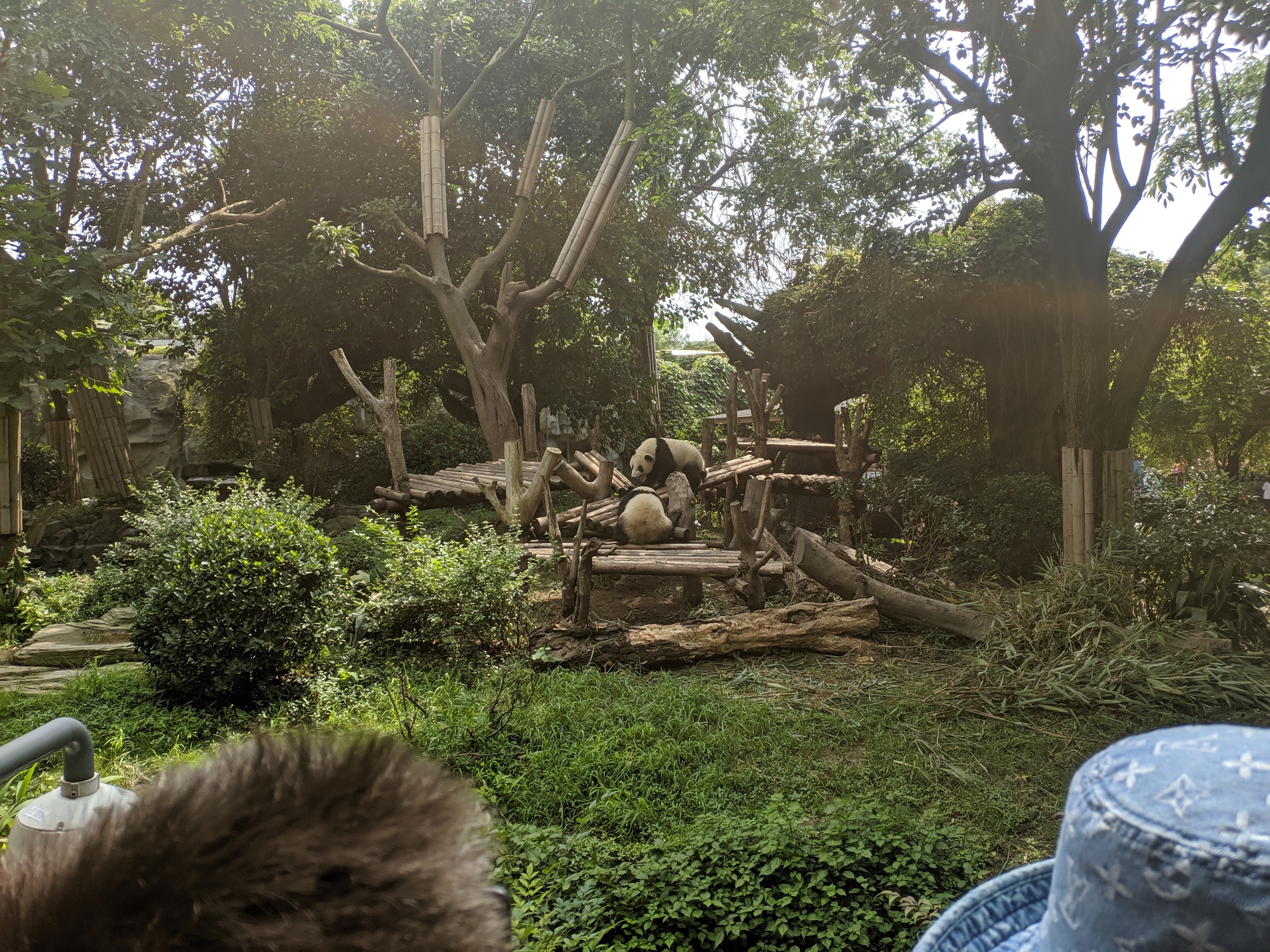
Conservation center, landscaped walking site, and early-morning wildlife visit
Chengdu Research Base of Giant Panda Breeding
- Best for
- First-time visitors, families, giant pandas, red pandas, and a major Chengdu landmark
- Why go
- The base combines conservation work with extensive habitats and gives the most practical central-Chengdu route for seeing giant pandas.
- Best time
- Reserve the earliest practical entry on a cool morning; activity often drops as heat and crowds increase.
- How long
- 4-6 hours including entrance queues and the large internal walking route.
Nearby pairings: North Chengdu lunch, Zhaojue Temple only with time, Early hotel rest, No tight afternoon reservation
Practical note: Book through the official base channel, bring the passport used for booking, confirm the selected gate, and do not confuse this site with Panda Valley or other facilities around Dujiangyan.
Public park, traditional teahouse, gardens, and everyday city life
People's Park and Heming Teahouse
- Best for
- A slow morning, tea culture, people-watching, shade, and a flexible central stop
- Why go
- The park shows Chengdu's social pace more clearly than another checklist sight: residents gather around tea tables, paths, gardens, and informal activities.
- Best time
- Morning on a mild day or a dry gap between showers; arrive before the busiest afternoon tea period.
- How long
- 90 minutes to 3 hours depending on whether you stop for tea.
Nearby pairings: Tianfu Square, Sichuan Art Museum, Kuanzhai Alleys, Jin River walk
Practical note: Confirm tea and optional service prices before ordering, keep bags controlled around crowded tables, and treat the park as active local space rather than a staged performance.
Neighborhoods, lanes, and local Chengdu
Tourist lanes work best as short orientation stops; spend the longer block in a lived-in food or riverside neighborhood where the route can follow your own pace.
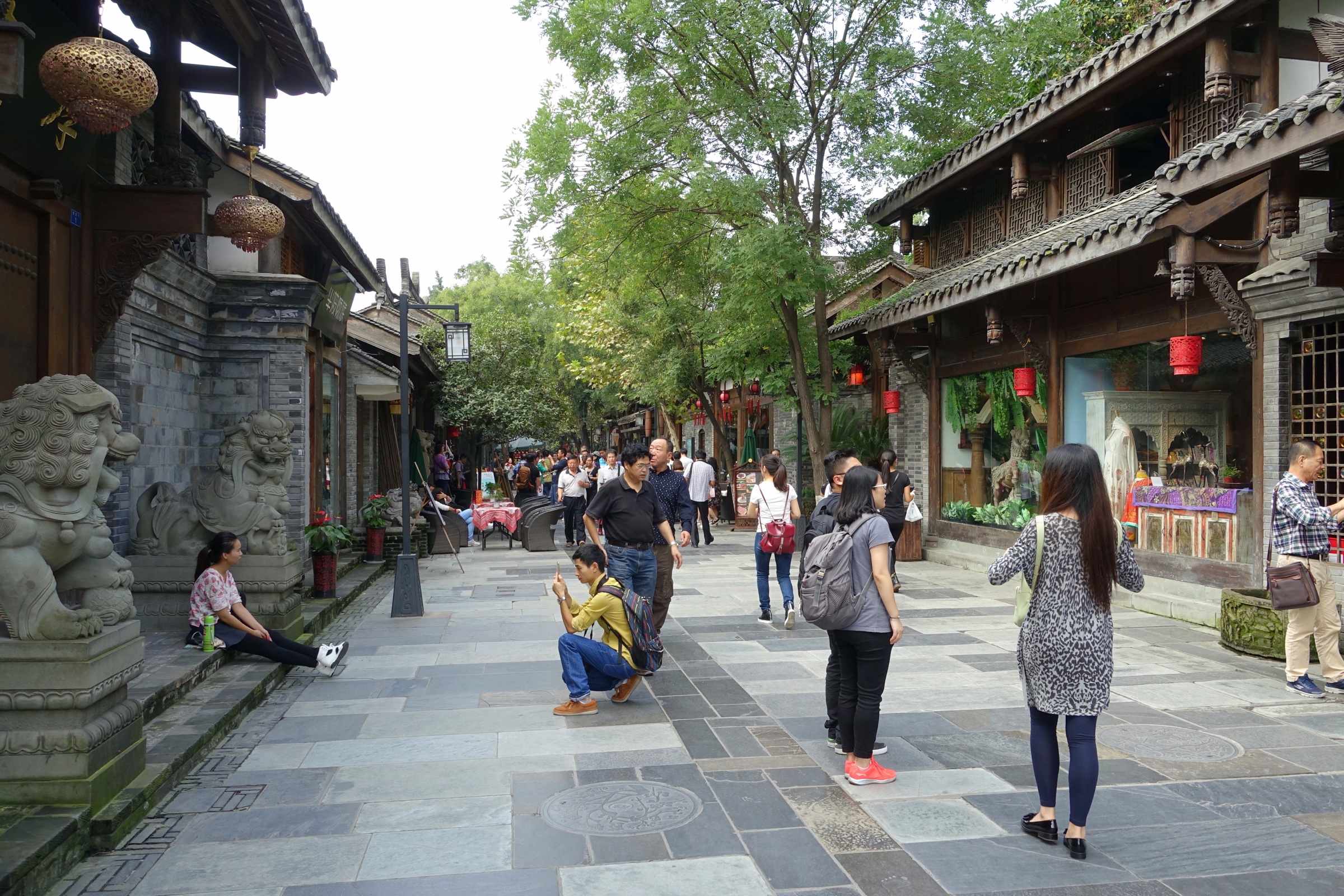
Historic lane ensemble, courtyards, shops, and nearby neighborhood walk
Kuanzhai Alleys and Paotongshu Street
- Best for
- Architecture, first-day orientation, snacks, courtyards, and an easy central route
- Why go
- The restored alleys make old Chengdu's lane scale legible, while nearby streets add quieter cafes, homes, and small businesses beyond the busiest visitor corridor.
- Best time
- Early morning for the lanes or late afternoon for atmosphere; avoid holiday peak density and heavy downpours.
- How long
- 2-3 hours including one nearby street loop.
Nearby pairings: People's Park, Paotongshu Street, Xiaotong Alley, Tianfu Square
Practical note: Treat Wide, Narrow, and Well alleys as a compact commercial heritage area, not a complete local-neighborhood experience. Check prices before food, tea, costume, or performance purchases.
Residential neighborhood, local restaurants, bars, cafes, and evening street life
Yulin and Fangcao Street
- Best for
- A less formal Chengdu evening, small restaurants, live music, and travelers who prefer neighborhoods to landmarks
- Why go
- Yulin offers a dense but everyday mix of food and social venues, making it easier to build an evening around one walkable district instead of chasing isolated famous restaurants.
- Best time
- Late afternoon through dinner; weekday evenings are easier for an unhurried walk.
- How long
- 2-4 hours.
Nearby pairings: Fangcao Street, Yulin West Road, Nijiaqiao, Tongzilin
Practical note: Save the exact venue because names and pins can be similar, verify current hours, keep dietary or spice-level text in Chinese, and set a clear ride-hailing pickup point away from narrow lanes.
Museums, temples, and Shu culture
Chengdu's strongest indoor anchors cover ancient Shu archaeology, Three Kingdoms history, and living religious spaces; confirm the exact venue and closure day before crossing town.
Archaeological site museum, ancient Shu collections, and landscaped grounds
Jinsha Site Museum
- Best for
- Ancient history, archaeology, gold artifacts, families, and a substantial wet-weather block
- Why go
- The excavation hall and museum collections explain the ancient Shu world beneath modern Chengdu and provide historical depth beyond the city's food-and-pandas image.
- Best time
- Morning or early afternoon; use the indoor galleries first during rain or heat.
- How long
- 3-4 hours.
Nearby pairings: Qingyang Palace, Culture Park, Northwest Chengdu meal, People's Park on another block
Practical note: Check the current closure day, ticket or identity requirements, and route to the museum entrance rather than a broad Jinsha neighborhood pin; some site areas remain outdoors.
Three Kingdoms history museum, memorial complex, gardens, and commercial lane
Wuhou Shrine and Jinli
- Best for
- Three Kingdoms history, historic gardens, cultural context, and a central half day
- Why go
- The shrine gives coherent historical meaning to Chengdu's Shu-Han legacy; neighboring Jinli is most useful as a brief food or evening extension afterward.
- Best time
- Visit the museum near opening, then decide whether crowd and weather conditions make Jinli worthwhile.
- How long
- 2-4 hours including a selective Jinli walk.
Nearby pairings: Jinli, Tibet Street area, Wangjiang Pavilion on another day, Yulin dinner
Practical note: Buy the correct museum admission, follow photography and heritage-space rules, and do not assume commercial shows or activities in Jinli are included with the shrine ticket.
Food, teahouses, and nightlife
Choose a meal by neighborhood, spice tolerance, and reservation reality. Chengdu rewards a clear fallback more than a cross-city trip to one viral table.
Communal Sichuan meal, skewers, late dinner, and local social ritual
Hotpot or chuanchuan in a chosen neighborhood
- Best for
- Groups, bold flavors, long dinners, and Chengdu's defining food experience
- Why go
- The broth, dipping sauce, ingredient choices, and shared pace make the meal an experience rather than simply another spicy dish.
- Best time
- Early dinner to avoid the longest queues, especially on weekends.
- How long
- 2-3 hours including ordering and a slower meal.
Nearby pairings: Yulin, Wangping Street, Jianshe Road, Hotel return without another timed sight
Practical note: Ask about broth heat, beef tallow, offal, allergens, and portion size before ordering. Keep a non-spicy broth or nearby alternative ready, and verify the final bill against ordered items.
Riverside food street, cafes, bars, music, and night walk
Wangping Street and Jiuyan Bridge evening
- Best for
- Casual dinner, contemporary Chengdu, river views, and choosing between quiet cafes or a later night
- Why go
- The east-central river corridor lets visitors shape an evening from food and coffee to bars without committing to one enclosed entertainment district.
- Best time
- Sunset through late evening on a dry night; check venue hours and the last practical return before staying late.
- How long
- 2-5 hours.
Nearby pairings: Xiangxiang Lane, Dongmen Bridge, Lan Kwai Fong Chengdu, Taikoo Li
Practical note: Pick a specific venue or bridge as the meeting and pickup point, avoid riverside edges during storms or flooding notices, and confirm drink prices before ordering in nightlife venues.
Dujiangyan and city-edge walks
Keep Dujiangyan as a full logistics day with its own forecast. For a lighter escape, use a greenway or riverside segment that returns easily to the metro network.
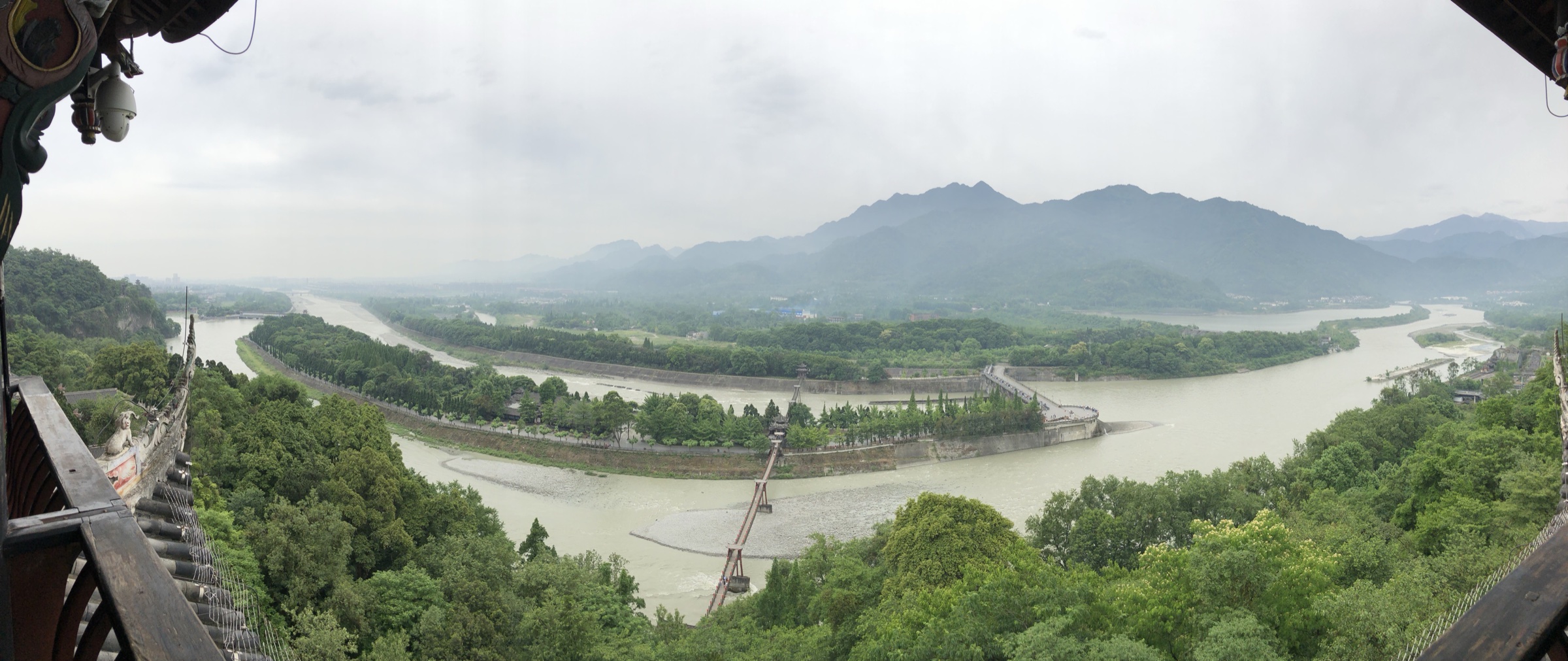
UNESCO water-engineering landscape, mountain-edge paths, and full-day excursion
Dujiangyan Irrigation System
- Best for
- Engineering history, river landscapes, ancient infrastructure, and a major day trip
- Why go
- The working irrigation system explains how water engineering shaped the Chengdu Plain and pairs an ancient technical achievement with dramatic river and mountain scenery.
- Best time
- A dry day with safe river, bridge, and hillside conditions; postpone during thunderstorms, intense rain, flooding, or high-wind notices.
- How long
- Full day from central Chengdu, including rail or road transfer and the large site.
Nearby pairings: Guanxian Ancient City, One Dujiangyan meal, No distant panda facility without a separate transfer plan, No tight Chengdu evening booking
Practical note: Confirm whether the train uses Lidui Park, Dujiangyan, or another station, choose the site entrance and walking direction in advance, and recheck bridge, path, rail, and weather notices before departure.
Urban greenway, riverside walk, cycling, and modern public space
Jin River or Tianfu Greenway segment
- Best for
- A flexible outdoor half day, easy exercise, neighborhood views, and recovery between major sights
- Why go
- A selected greenway segment shows how residents use Chengdu's newer public landscape and gives the trip breathing room without another ticketed attraction.
- Best time
- Morning or late afternoon in dry, mild weather; avoid exposed routes during lightning, extreme heat, or heavy rain.
- How long
- 1-3 hours for one deliberately chosen segment.
Nearby pairings: Wangjiang Pavilion, Dongmen Bridge, Jincheng Lake, A meal near the chosen metro stop
Practical note: Do not navigate to the entire greenway as one attraction. Choose two named endpoints, check bike rules or rental setup before relying on it, and keep an easy metro or ride-hailing exit.
Suggested routes
Chengdu essentials in three days
Start the panda day early, keep one indoor history block, and leave every evening flexible for food.
- Day 1: People's Park → Kuanzhai Alleys → Yulin dinner
- Day 2: Panda Base → hotel rest → Wangping Street
- Day 3: Jinsha Site Museum → Wuhou Shrine → hotpot near the hotel
Four-day city and Dujiangyan route
Adds the major water-engineering day trip without squeezing it between central-city reservations.
- Day 1: People's Park → central city walk
- Day 2: Panda Base → quiet evening
- Day 3: Dujiangyan Irrigation System → return without a fixed night plan
- Day 4: Jinsha Site Museum → Yulin or Wangping Street
Rain, humidity, or low-energy fallback
Keep confirmed indoor entries, shorten open parks and greenways, and eat close to the current district.
- Jinsha Site Museum galleries
- Wuhou Shrine or another confirmed museum block
- Covered teahouse with prices checked
- Move Panda Base and Dujiangyan to the safest forecast windows
Quick answer for Chengdu
Tianfu Square, Chunxi Road, or another central metro area that keeps food streets, parks, and museum routes manageable.
Start one major sight early, leave the humid afternoon flexible, then use a teahouse, neighborhood, or food block near the hotel.
Yulin, Wangping Street, Wenshu lanes, Fangcao Street, and the quieter edges of People's Park.
Choose one hotpot or bar neighborhood, save the exact restaurant and pickup point, and avoid crossing the city only for a social-media queue.
Live planning check
Chengdu seven-day weather
Forecasts can change and do not replace attraction or safety notices. Weather data by Open-Meteo.com · CC BY 4.0
Apps for this city
Prepare these before arrival

DiDi China
Ride hailing, pickup points, and driver messaging
First-city transport and late arrivals
Alipay
Payments, transport QR codes, and local services
Payment setup and wallet fallback
Messaging, payments, mini programs, and service accounts
Payment and communication backup
Google Translate
Downloaded languages, camera translation, and typed phrases
Signs, menus, labels, and staffed helpFrequently asked questions
When should I visit the Chengdu Panda Base?
Reserve ahead and favor a cooler morning. Recheck the official ticket, entrance, weather, and animal-area notices before departure.
Can I combine central Chengdu and Dujiangyan casually?
Treat Dujiangyan as a separate day trip. Confirm the exact railway station, attraction entrance, and last practical return before leaving Chengdu.
What is a useful wet-weather plan in Chengdu?
Use a confirmed museum such as Jinsha, shorten exposed park time, and leave extra road or metro margin during heavy rain.